
Creating Digital Cityscapes: How VR Is Shaping Urban Life Online
Explore how virtual reality is shaping urban life through digital cityscapes, immersive planning tools, and new ways to experience cities online.
From Concrete to Code: The Rise of Virtual Metropolises
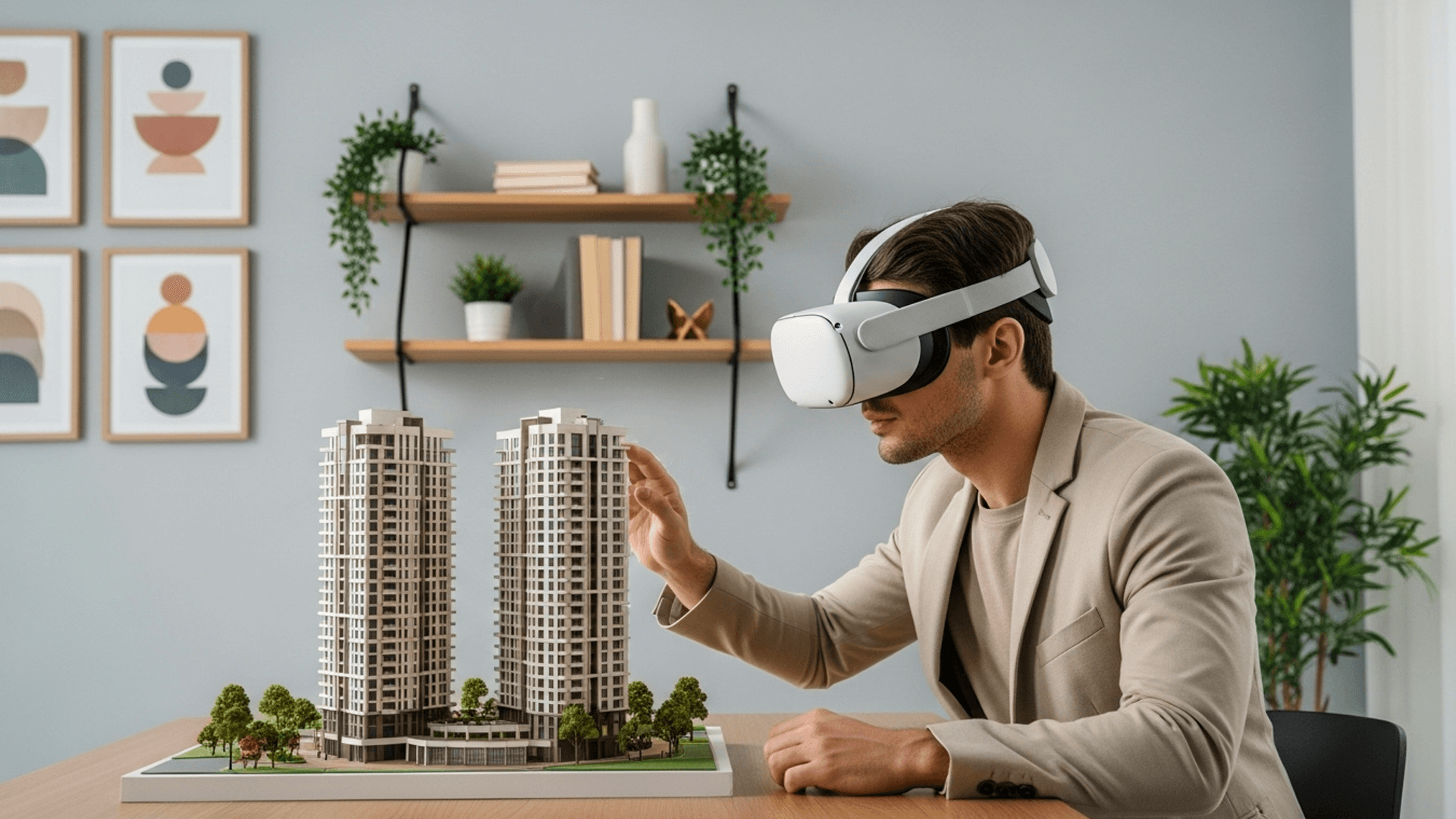
A few years ago, I watched a city planner slip on a VR headset and walk through a neighborhood that didn’t yet exist. Streets hummed with simulated traffic. Shadows shifted as the virtual sun crossed a skybox horizon. “This is where the café will be,” she said, pointing to empty air. That moment felt like witnessing a cartographer map a continent made of photons and polygons. Virtual reality is no longer a novelty; it has become a drafting table for future cities and a living room for communities that might never share the same physical soil.
Digital cityscapes now function as civic laboratories, cultural stages, and economic arenas. They borrow DNA from game engines, architectural software, and social networks, recombining into something unprecedented. The result is a parallel urbanity—less constrained by gravity, zoning laws, or scarcity, yet shaped by code, bandwidth, and human imagination. As VR matures, it is quietly redefining how we design, inhabit, govern, and even emotionally relate to cities that exist entirely online.
Architectural Alchemy in Virtual Space
Parametric Design Meets Immersive Prototyping
In physical architecture, blueprints flatten ambition into two dimensions. In VR, ambition stands up and invites critique. Architects now sculpt parametric forms inside immersive workspaces, bending digital concrete with hand gestures. I once observed a designer stretch a tower’s façade like warm taffy, testing sunlight diffusion in real time. The building responded instantly, a responsive organism rather than inert geometry. This workflow collapses the latency between ideation and visualization, turning design into a continuous feedback loop.
The technical scaffolding behind this magic is a blend of real-time rendering, physics engines, and generative algorithms. Parametric nodes define relationships—window spacing, load distribution, airflow channels—while VR allows designers to inhabit those relationships at human scale. Errors reveal themselves viscerally: a cramped corridor feels claustrophobic, a misaligned stair induces vertigo. The city becomes a living spreadsheet, its variables negotiable, its outcomes immediately legible to anyone who steps inside.
Digital Twins and Urban Simulation
Cities increasingly maintain “digital twins,” high-fidelity replicas that mirror real-world infrastructure down to sewer lines and sensor grids. In VR, these twins become navigable terrains where planners can rehearse disasters or optimize traffic flows. Imagine standing on a virtual bridge while a simulated flood surges beneath, watching stress data pulse along structural beams. The experience transforms abstract metrics into embodied knowledge, compressing years of modeling into minutes of intuition.
These simulations integrate IoT feeds, GIS layers, and machine-learning forecasts. A change in bus routes ripples through commuter density heatmaps. A new park recalibrates microclimate models. VR acts as the narrative interface, translating data into spatial stories. The city, once opaque and bureaucratic, becomes transparent and conversational. Decision-makers no longer argue over spreadsheets; they walk the consequences of their choices before committing concrete to ground.
Zoning Without Gravity
Virtual cities are liberated from the tyranny of gravity and land scarcity. Skyscrapers can spiral like seashells, neighborhoods can float above oceans, and public squares can hover in midair. This freedom births a new zoning logic based on experience rather than efficiency. In one VR world, I visited a library suspended inside a translucent sphere, its floors arranged like planetary orbits. The layout defied Euclidean sensibilities yet felt intuitive once inside.
Technically, this requires rethinking collision models, locomotion systems, and spatial affordances. Without gravity, how do users orient themselves? Designers employ visual anchors, ambient sound cues, and subtle haptic feedback to create cognitive landmarks. Zoning becomes dramaturgy, orchestrating emotional rhythms instead of traffic flows. The result is an urban grammar that privileges wonder and narrative coherence over practicality, a city as poem rather than machine.
Social Fabric in Synthetic Streets
Presence, Proximity, and Digital Serendipity
In VR, presence is not merely visual; it is spatial and emotional. When two avatars stand shoulder to shoulder, even if separated by continents, the brain registers intimacy. I once struck up a conversation with a stranger in a virtual plaza because our avatars reached for the same holographic newspaper. The encounter felt uncannily like a sidewalk collision, complete with awkward apologies and shared laughter.
This serendipity emerges from proximity algorithms and spatial audio. Platforms design plazas, cafés, and transit hubs as social condensers where user paths intersect. Voice attenuation mimics real-world acoustics, growing louder as avatars approach. Eye-tracking and gesture recognition add layers of nonverbal nuance. The city becomes a choreography of chance encounters, reintroducing urban spontaneity into digital life often dominated by curated feeds and algorithmic isolation.
Identity, Avatars, and Civic Expression
Avatars function as both masks and mirrors. In digital cities, people experiment with identity through customizable bodies, attire, and even physics-defying appendages. I met a city council “member” whose avatar was a phoenix, feathers shimmering with data-driven iridescence. She argued zoning policy with a gravitas that transcended her fantastical form, proving that credibility in VR hinges more on discourse than appearance.
Technically, avatar systems rely on modular rigs, skin shaders, and animation blending. But socially, they become instruments of civic expression. Flags, fashion, and symbolic gestures evolve into political statements. Protest marches unfold as synchronized avatar swarms, their chants encoded into spatial audio loops. The city’s social fabric stretches to accommodate fluid identities, enabling a pluralism that physical urbanism often struggles to sustain.
Rituals, Festivals, and Digital Public Space
Public rituals anchor communal memory, and VR cities are inventing their own. Annual light festivals, digital parades, and immersive concerts draw thousands into shared experiences. I attended a virtual New Year’s celebration where fireworks erupted into fractal constellations, each burst representing a user’s wish for the coming year. The spectacle felt less like watching a show and more like inhabiting a collective dream.
Behind the scenes, event orchestration involves load balancing, instancing, and synchronized state management. Servers distribute crowds across shards while maintaining visual continuity. Procedural effects scale dynamically to avoid frame drops. These technical feats enable civic rituals that are simultaneously intimate and massive. The city square, once limited by physical capacity, becomes an elastic amphitheater where culture can proliferate without spatial constraints.
Economies of Pixels and Protocols
Virtual Real Estate and Scarcity Engineering
In a world where land is theoretically infinite, developers manufacture scarcity through protocols. Parcels in prime VR districts are tokenized, traded, and developed much like physical property. I once watched an auction for a digital waterfront plot conclude at a price rivaling a suburban home. The bidders weren’t irrational; they were investing in foot traffic, brand visibility, and social prestige.
This economy runs on blockchain registries, smart contracts, and marketplace APIs. Scarcity is enforced algorithmically by limiting parcel supply or gating access through subscription tiers. Developers manipulate desirability through urban design—placing landmarks, transit nodes, and event venues strategically. The result is a speculative urbanism where value accrues not from location alone but from narrative significance and community density.
Labor Markets in Virtual Districts
VR cities host labor markets as diverse as their skylines. Architects sell digital buildings, performers host ticketed shows, and educators run immersive classrooms. I met a “street vendor” who crafted virtual pastries, each with animated steam and customizable flavors, selling them for microtransactions. His storefront buzzed with patrons, proof that craftsmanship still matters even when the product is intangible.
Technically, these markets depend on secure payment rails, asset pipelines, and rights management. Digital goods are minted as NFTs or proprietary assets, tracked across user inventories. AI moderation filters fraud while recommendation engines surface vendors to potential customers. The city becomes an economic ecosystem where creativity translates directly into currency, dissolving the boundary between play and work.
Governance, Taxation, and Algorithmic Law
As VR economies grow, governance follows. Some platforms impose taxes on transactions, funding infrastructure and moderation. Others experiment with decentralized autonomous organizations, letting users vote on zoning changes or content policies. I once participated in a referendum to ban intrusive advertising holograms from a central plaza. The vote passed, and the ads vanished overnight, a testament to algorithmic law in action.
These systems rely on consensus mechanisms, reputation scores, and automated enforcement. Smart contracts execute policy without bureaucratic lag. Yet challenges persist: jurisdictional ambiguity, exploitation loopholes, and governance capture by wealthy stakeholders. VR cities become laboratories for civic innovation, testing governance models that might one day migrate back into physical municipalities.
Infrastructure of Illusion
Rendering Pipelines and Sensory Fidelity
The illusion of a city hinges on photons and frames. Real-time rendering pipelines juggle polygon counts, shader complexity, and lighting models to maintain immersion. I once toggled a setting that replaced dynamic shadows with baked lighting; the city felt suddenly flatter, as if a vital organ had been removed. Sensory fidelity is not mere aesthetics; it is the substrate of believability.
Under the hood, engines deploy foveated rendering, occlusion culling, and level-of-detail hierarchies. GPUs prioritize pixels where the user’s gaze lingers, economizing computational effort. Spatial audio engines simulate reverberation and Doppler shifts, adding acoustic depth. Together, these technologies weave a multisensory tapestry that convinces the brain it has stepped into another urban reality.
Networking, Latency, and Crowd Dynamics
A city is a choreography of moving bodies, and in VR those bodies are data packets. Low latency is the difference between fluid conversation and uncanny delay. I once experienced a two-second lag during a debate in a virtual council chamber; the conversation devolved into awkward overlaps, like a bad satellite call. Technical stability shapes social cohesion.
Engineers combat latency through edge computing, predictive interpolation, and state synchronization. User movements are extrapolated milliseconds into the future to mask network jitter. Crowd dynamics algorithms manage collision avoidance and flow, preventing avatar pileups at transit hubs. The city’s rhythm emerges from these invisible protocols, its social tempo tuned by network topology.
Haptics, Wearables, and Embodied Space
The future of digital cities extends beyond sight and sound. Haptic gloves, treadmills, and neural interfaces promise embodied immersion. I tested a prototype suit that vibrated when a virtual train roared past, sending a thrill through my spine. The city suddenly had weight, texture, and consequence.
These systems integrate pressure sensors, actuators, and biosignal feedback loops. Software translates virtual events into tactile cues, mapping collisions to localized vibrations. As wearables mature, they will add layers of proprioception and kinesthetic realism. The city will not only be seen and heard; it will be felt, collapsing the boundary between simulation and somatic experience.
Ethics, Futures, and Urban Mythology
Surveillance, Privacy, and Data Sovereignty
Every movement in a VR city generates data—gaze vectors, speech patterns, locomotion habits. Who owns this telemetry? I once received an ad for a virtual shoe store moments after admiring another user’s footwear. The coincidence felt less magical than invasive, a reminder that digital cities are panopticons by default.
Ethical design demands encryption, anonymization, and transparent consent protocols. Federated identity systems can let users carry reputations without exposing raw data. Differential privacy techniques obfuscate individual behaviors while preserving aggregate insights. The city must balance personalization with autonomy, resisting the temptation to monetize every footstep and glance.
Digital Divide and Accessibility
VR cities risk reproducing inequalities if access remains gated by expensive hardware and high-bandwidth networks. I volunteered in a pilot program that lent headsets to rural students, watching their faces light up as they explored a virtual museum. The experience underscored both the promise and fragility of digital inclusion.
Technically, accessibility hinges on lightweight clients, adaptive streaming, and cross-platform compatibility. Cloud rendering can offload computation to servers, enabling participation from low-end devices. Inclusive design also involves motion sickness mitigation, captioning, and alternative locomotion modes. A truly democratic digital city must be architected for bodies and budgets of all kinds.
Myth, Memory, and the Soul of Cities
Cities are not just infrastructure; they are myth engines, repositories of collective memory. VR cities will develop their own legends—haunted alleys, heroic plazas, infamous nightclubs. I once heard users whisper about a hidden rooftop garden accessible only at sunset, a rumor that drew pilgrims until the myth became reality.
These narratives emerge from user-generated content, emergent behaviors, and shared experiences. Technically, they are stitched together by persistent state management and content moderation. Culturally, they become the soul of the city, infusing code with meaning. As VR urbanism matures, its greatest achievement may not be technical prowess but the birth of new mythologies that bind communities across physical and digital realms.
Digital cityscapes are no longer speculative fiction; they are operational realities reshaping how humans design, socialize, trade, and govern. They function as mirrors and magnifiers, reflecting our urban instincts while amplifying our creative latitude. As we continue to build these synthetic metropolises, the challenge will be to ensure they inherit not just the efficiency of machines but the empathy, plurality, and narrative richness that make cities worth inhabiting—whether their streets are paved with asphalt or algorithms.
Author: Elisha Roodt
Durban's leading intelligence hub on immersive technology. Delivering comprehensive coverage, expert analysis, and breakthrough news on Virtual Reality (VR), Augmented Reality (AR), and the Metaverse.