
Virtual Reality uses for Business
In recent years, Virtual Reality (VR) has transcended its origins in gaming and entertainment to become a transformative tool in the business...
In recent years, Virtual Reality (VR) has transcended its origins in gaming and entertainment to become a transformative tool in the business world. Today, VR is revolutionizing employee training, operational simulations, and remote work, offering innovative solutions that enhance efficiency and engagement. This article delves into the multifaceted applications of VR in these domains and highlights success stories from companies that have effectively integrated VR into their operations.
Transforming Employee Training with VR
VR is reshaping employee training by providing immersive and interactive learning experiences that traditional methods cannot match. The ability to simulate real-world scenarios in a controlled virtual environment makes VR an invaluable tool for various industries.
Enhancing Safety Training: High-risk industries such as construction, manufacturing, and healthcare benefit greatly from VR-based safety training. VR allows employees to experience dangerous situations without real-world risks, teaching them how to respond effectively. For instance, retail giant Walmart uses VR to prepare employees for hectic scenarios like Black Friday, ensuring they are ready to handle high-pressure situations safely.
Developing Technical Skills: VR is also pivotal in training employees in technical skills, particularly in fields like aviation and automotive. Boeing utilizes VR to train its technicians on airplane assembly, reducing errors and improving productivity. Similarly, automotive companies use VR to train workers on assembly line processes and maintenance tasks, enhancing skill acquisition and efficiency.
Advancing Simulation Capabilities
Simulation is another area where VR proves its worth, allowing companies to create detailed, realistic models of various processes and scenarios. This capability is crucial for testing and improving operations without the costs and risks of physical trials.
Innovating Product Design and Testing: Automotive giants such as Ford and General Motors employ VR to simulate and refine vehicle designs. Engineers can walk around virtual car models, inspect components, and make adjustments in real-time. This accelerates the design process and reduces reliance on physical prototypes, saving time and resources.
Preparing for Crisis Management: VR simulations are essential for training emergency response teams. They can practice managing natural disasters, industrial accidents, and other emergencies in a safe, virtual environment. This prepares them for real-world crises, enhancing their readiness and response capabilities.
Enhancing Remote Work with VR
The global shift towards remote work, accelerated by the COVID-19 pandemic, has spotlighted VR's potential to enhance remote collaboration and communication. VR provides a virtual office environment where employees can interact and collaborate as if they were physically together. By creating immersive and interactive workspaces, VR is revolutionizing how businesses operate in a remote setting, offering significant improvements in engagement, productivity, and overall team dynamics.
Immersive Virtual Meetings
Traditional video conferencing platforms have limitations, often resulting in "Zoom fatigue" and a lack of engagement. In contrast, VR meeting platforms provide an immersive experience that mimics the dynamics of in-person meetings.
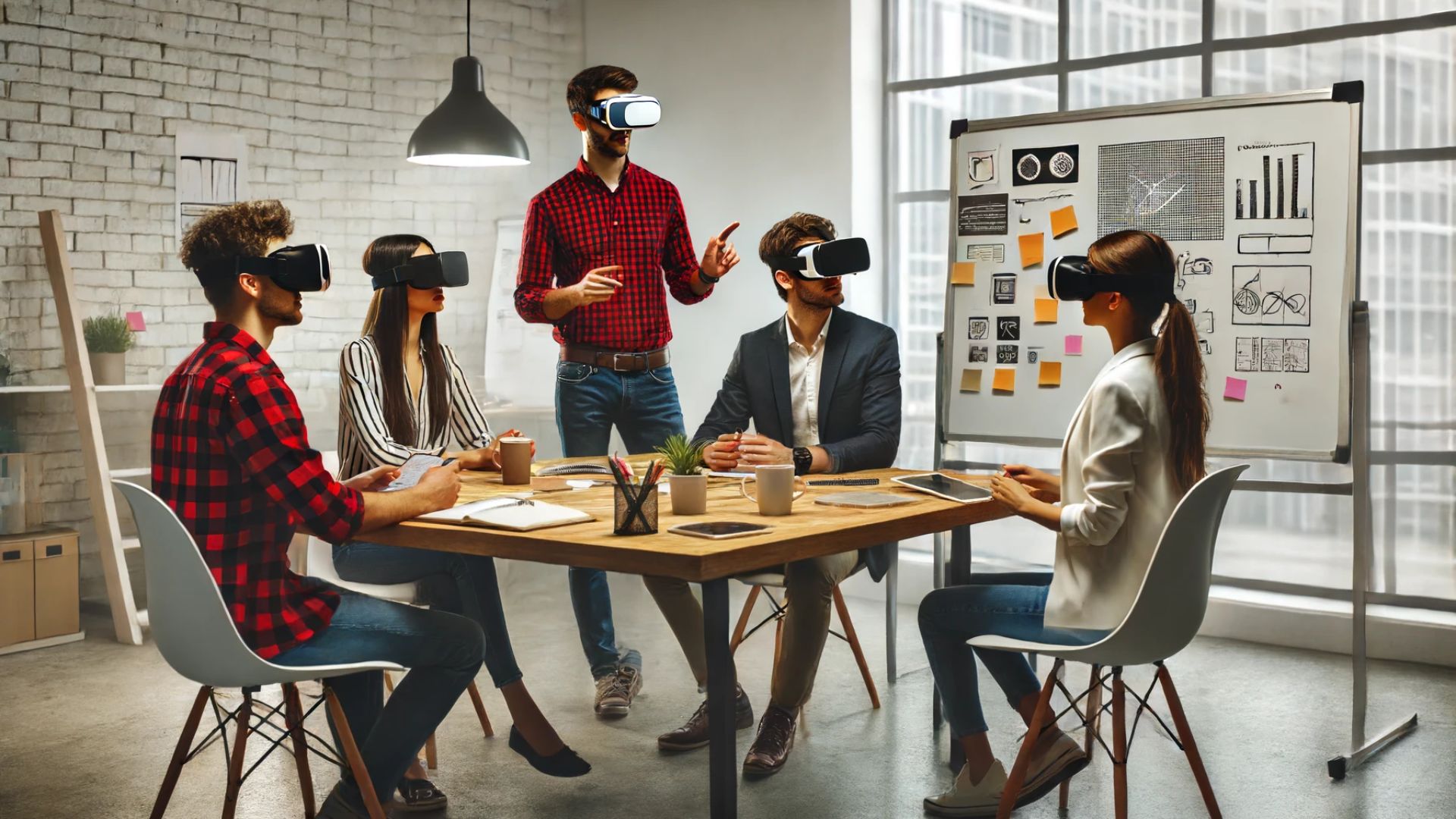
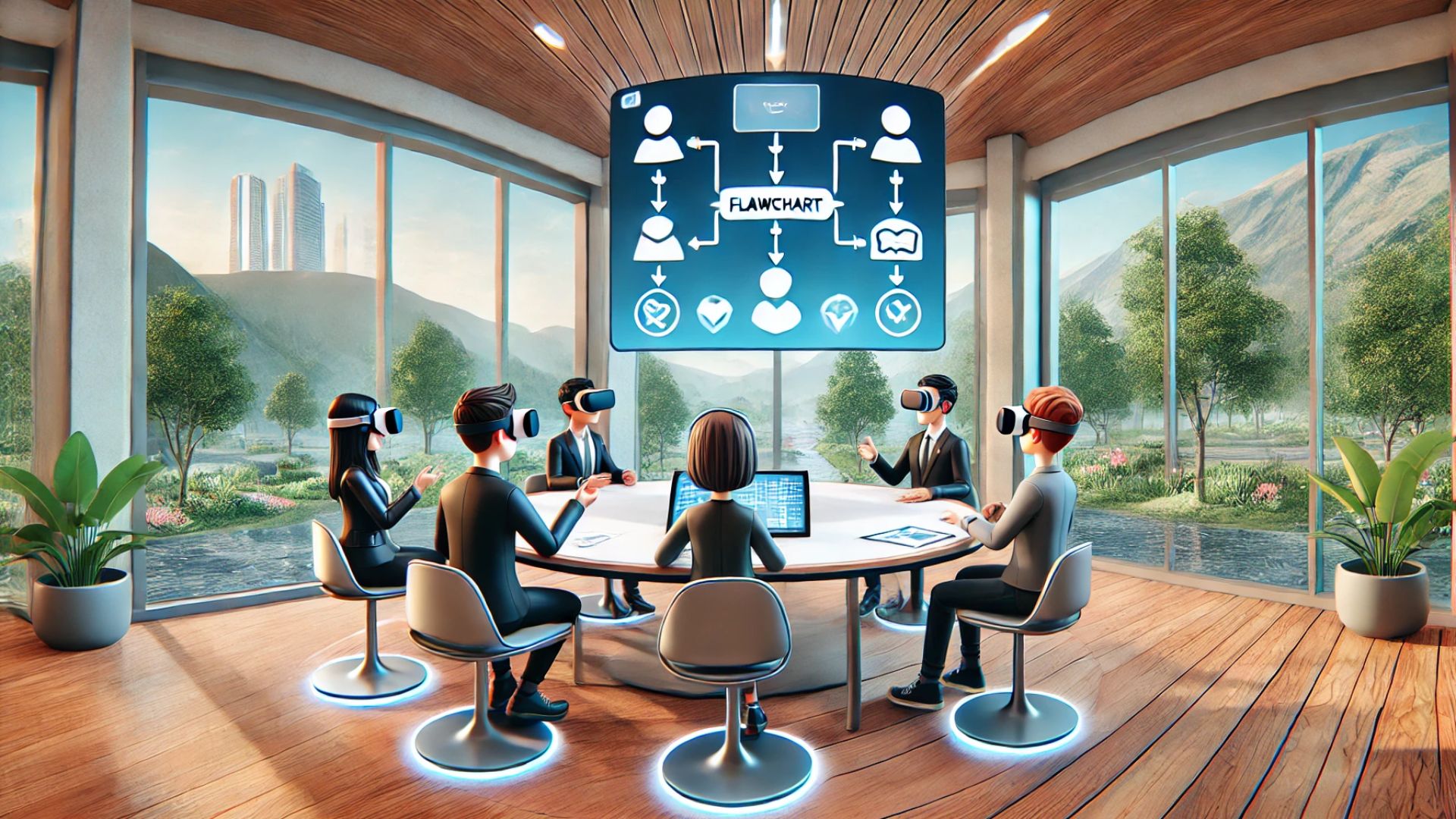
Horizon Workrooms: Developed by Meta, Horizon Workrooms allows participants to create avatars and join virtual meeting spaces equipped with interactive tools such as whiteboards, document sharing, and spatial audio. These features enhance the sense of presence, making participants feel as though they are in the same room. The avatars, which can mimic real-world gestures and expressions, add a layer of non-verbal communication that is often missing in traditional video calls. This immersive setting makes remote meetings more engaging, reduces the cognitive load associated with continuous video calls, and fosters more natural and dynamic interactions.
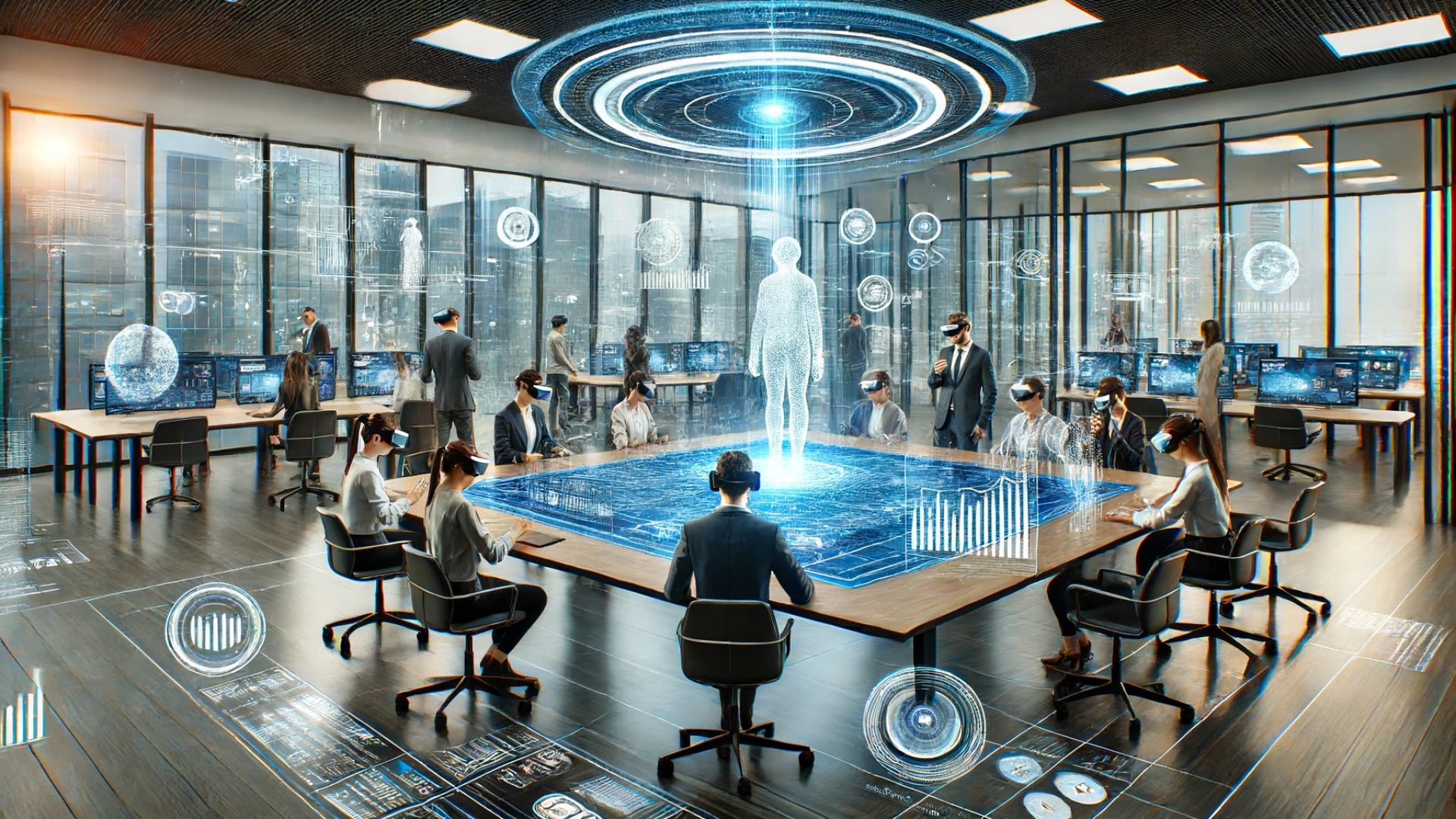
Microsoft Mesh: Microsoft Mesh takes virtual meetings a step further by enabling holographic presence. Participants can appear as holograms, which provides a more lifelike and interactive experience. Mesh supports a variety of devices, including VR headsets, PCs, and smartphones, making it accessible for all team members. By integrating with Microsoft's suite of productivity tools, Mesh allows seamless collaboration on documents, presentations, and projects within the virtual space. This integration helps maintain the workflow continuity that teams are accustomed to in a physical office.
Enhanced Collaboration: The immersive nature of VR meetings enhances collaboration by allowing team members to interact with virtual objects and environments. Features like shared whiteboards, 3D models, and real-time editing tools facilitate brainstorming sessions and collaborative tasks. Teams can visualize complex data, work on design projects, and conduct interactive workshops more effectively in a VR setting compared to traditional video conferencing.
Facilitating Remote Collaboration
Beyond meetings, VR supports remote collaboration on complex projects, providing tools and environments that enable real-time, interactive work.
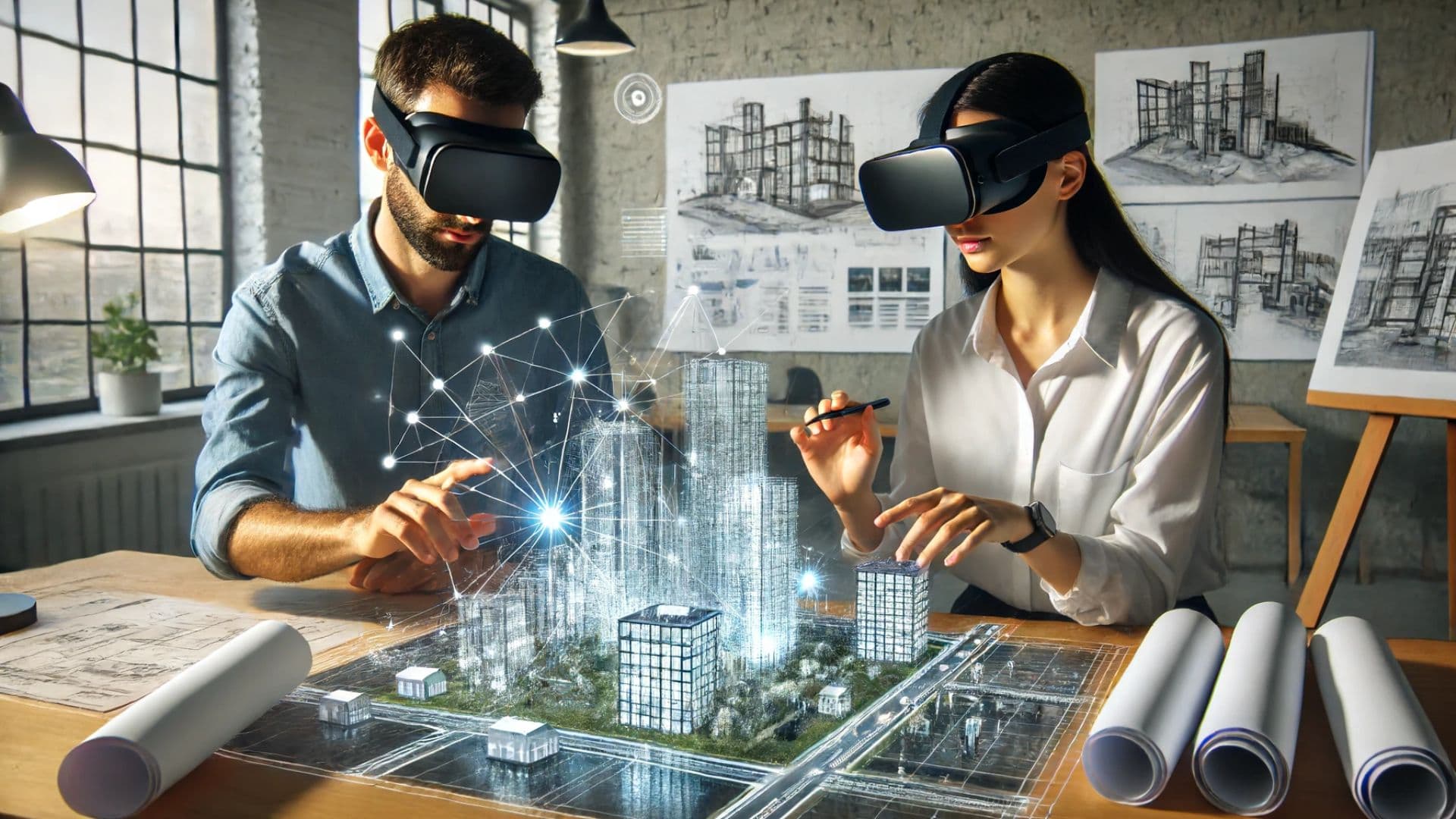
Architectural and Engineering Collaboration: In architecture and engineering, VR allows teams to create and explore virtual models of buildings and products. For instance, architects can walk through a virtual building, inspect details, and make real-time changes to the design. This capability enhances collaboration, as team members can provide immediate feedback and suggestions within the virtual environment. Architectural firms, such as Gensler, use VR to collaborate with clients and stakeholders worldwide, ensuring clear communication and efficient project management.
Product Development and Design: For product development, VR enables designers and engineers to collaborate on 3D models. Companies like Ford use VR to simulate and refine vehicle designs, allowing engineers to inspect virtual prototypes and make adjustments in real time. This process reduces the need for physical prototypes, saving time and costs, and allows for more iterative and collaborative design processes.
International Teams: One of the most significant advantages of VR is its ability to bridge geographical gaps. VR platforms create a shared virtual space where team members from different parts of the world can collaborate as if they were in the same room. This capability is particularly beneficial for international teams, enabling seamless collaboration across different time zones and overcoming the limitations of physical distance. For example, a design team spread across multiple countries can work together on a project in a VR environment, ensuring that everyone is on the same page and can contribute effectively.
Training and Skill Development: VR also facilitates remote training and skill development. Employees can participate in interactive training sessions that simulate real-world scenarios, enhancing learning outcomes. For instance, companies can conduct VR-based training for new software, equipment, or procedures, providing a hands-on learning experience that is more effective than traditional remote training methods.
Success Stories: Companies Thriving with VR
Lloyds Banking Group: By integrating VR into their training programs, Lloyds Banking Group has significantly improved customer service skills among employees. VR simulations of customer interactions provide a realistic and immersive training experience, resulting in better performance and higher customer satisfaction.
BP: The energy giant BP utilizes VR for safety training and emergency response simulations. Their VR programs cover scenarios like oil spills and fires, allowing employees to practice responses in a realistic yet safe environment. This has markedly improved their preparedness for real-world incidents.
Siemens: Siemens leverages VR for both training and product design. Their VR training programs encompass a broad range of technical skills, while VR simulations aid in designing and testing new products. This dual application has enhanced their training outcomes and streamlined product development processes.
Virtual Reality is redefining business operations by offering innovative solutions for training, simulation, and remote work. Companies that have embraced VR report enhanced efficiency, reduced costs, and improved employee performance. As VR technology continues to evolve, its applications in the business world are set to expand, driving further innovation and improvement across various industries.
Author: Elisha Roodt
Durban's leading intelligence hub on immersive technology. Delivering comprehensive coverage, expert analysis, and breakthrough news on Virtual Reality (VR), Augmented Reality (AR), and the Metaverse.