
Augmented Reality Applications for Local Businesses
Augmented Reality (AR) is rapidly transforming industries, offering businesses innovative ways to connect with customers and enhance experiences...
Augmented Reality (AR) is rapidly transforming industries, offering businesses innovative ways to connect with customers and enhance experiences. With the ability to merge the physical world with digital elements, AR offers an interactive layer that can fundamentally shift how customers engage with products, services, and environments. From retail to real estate and tourism, AR is empowering local businesses to thrive in an increasingly competitive market. By integrating this powerful tool, local enterprises are discovering new methods of enhancing consumer interactions and driving growth, all while standing out in the bustling cityscape.
As the technology behind AR becomes more accessible and widespread, its applications are becoming more refined, intuitive, and impactful. Whether it’s allowing customers to try on clothes virtually, enabling tourists to navigate a city effortlessly, or helping homebuyers visualize properties, AR offers a range of possibilities for businesses. For local companies in retail, real estate, and tourism, AR is not just a passing trend – it’s a transformative force that can lead to higher engagement, increased foot traffic, and a deeper connection between the business and the consumer.
The Retail Revolution: AR’s Impact on Shopping Experiences
Virtual Try-Ons: Transforming How We Shop
Imagine walking into your favorite store, browsing through a digital catalog of clothes and accessories, and instantly trying on items without stepping into a changing room. This is the reality that AR is creating for the retail industry. Virtual try-ons are rapidly becoming a key feature for fashion, beauty, and eyewear brands, but the application of this technology extends far beyond these categories.
AR-powered apps allow customers to scan their surroundings or upload photos of themselves to try out different products virtually. For instance, when shopping for clothing or accessories, customers can view themselves in a digital mirror that overlays the item on their image in real time. This feature eliminates the need for physically trying on every piece of clothing, saving time and providing a more enjoyable shopping experience.
Beauty and cosmetic brands are also benefiting from virtual try-ons. Customers can now try out makeup products like lipsticks, eyeshadows, and blushes by simply using their smartphones or tablets. This offers a convenient and hygienic way to explore products without the need for testers, while also allowing customers to see the immediate impact of their choices. Eyewear brands are using similar AR technology to allow users to “try on” glasses and sunglasses, adjusting them for size and style preferences before making a purchase. The benefits are clear: a more personalized, interactive, and efficient shopping experience.
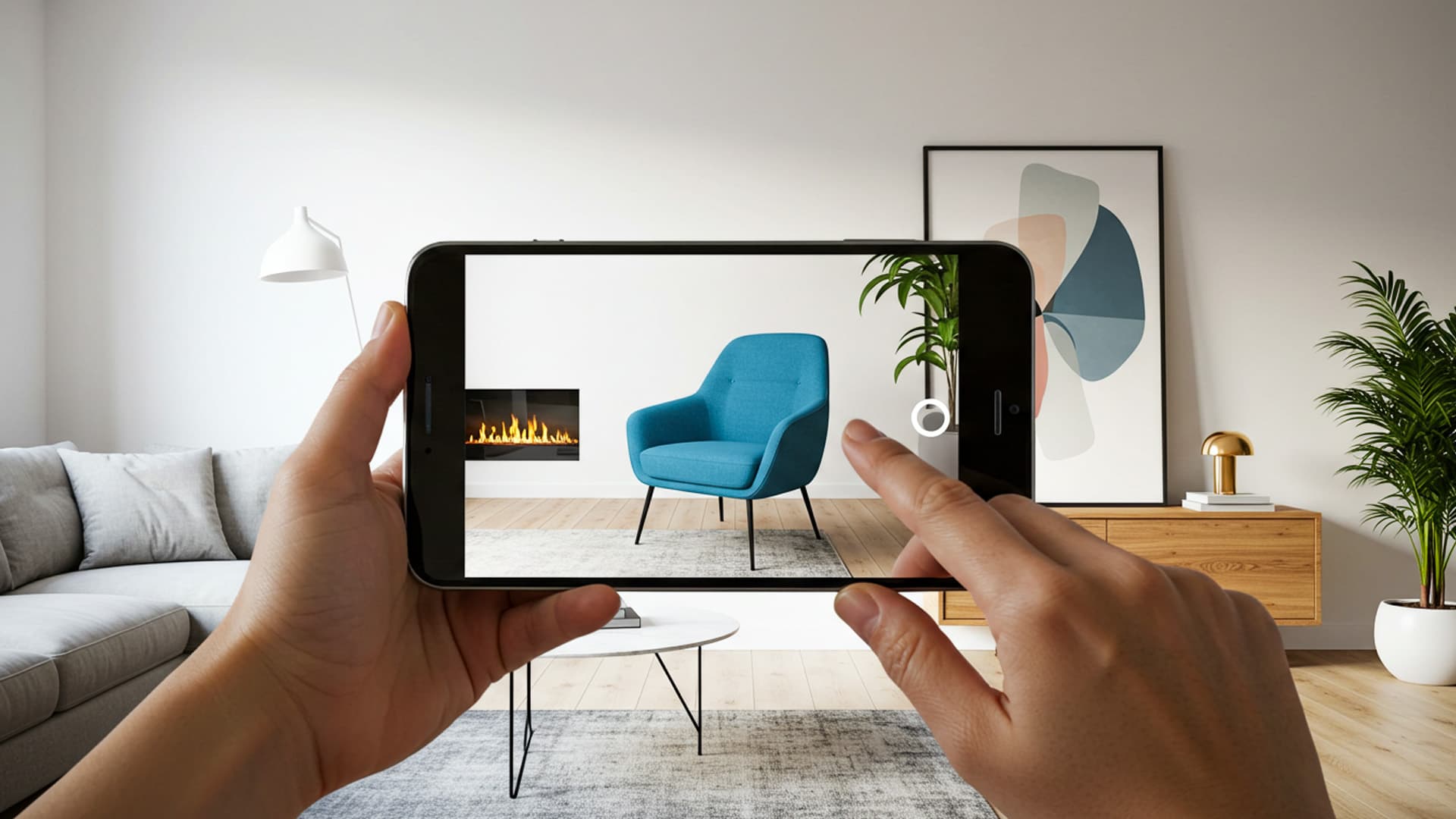
This transformation is even extending to furniture and home décor stores. With AR apps, customers can place virtual furniture pieces in their homes to visualize how they will fit into existing spaces. This visualization solves common issues around size, design, and placement, making it easier for customers to make purchase decisions.
Enhancing In-Store Navigation with AR
Retail environments, especially larger ones, often present navigation challenges. With hundreds of products spread across multiple aisles or floors, finding a specific item can be overwhelming. This is where AR-powered navigation comes into play.
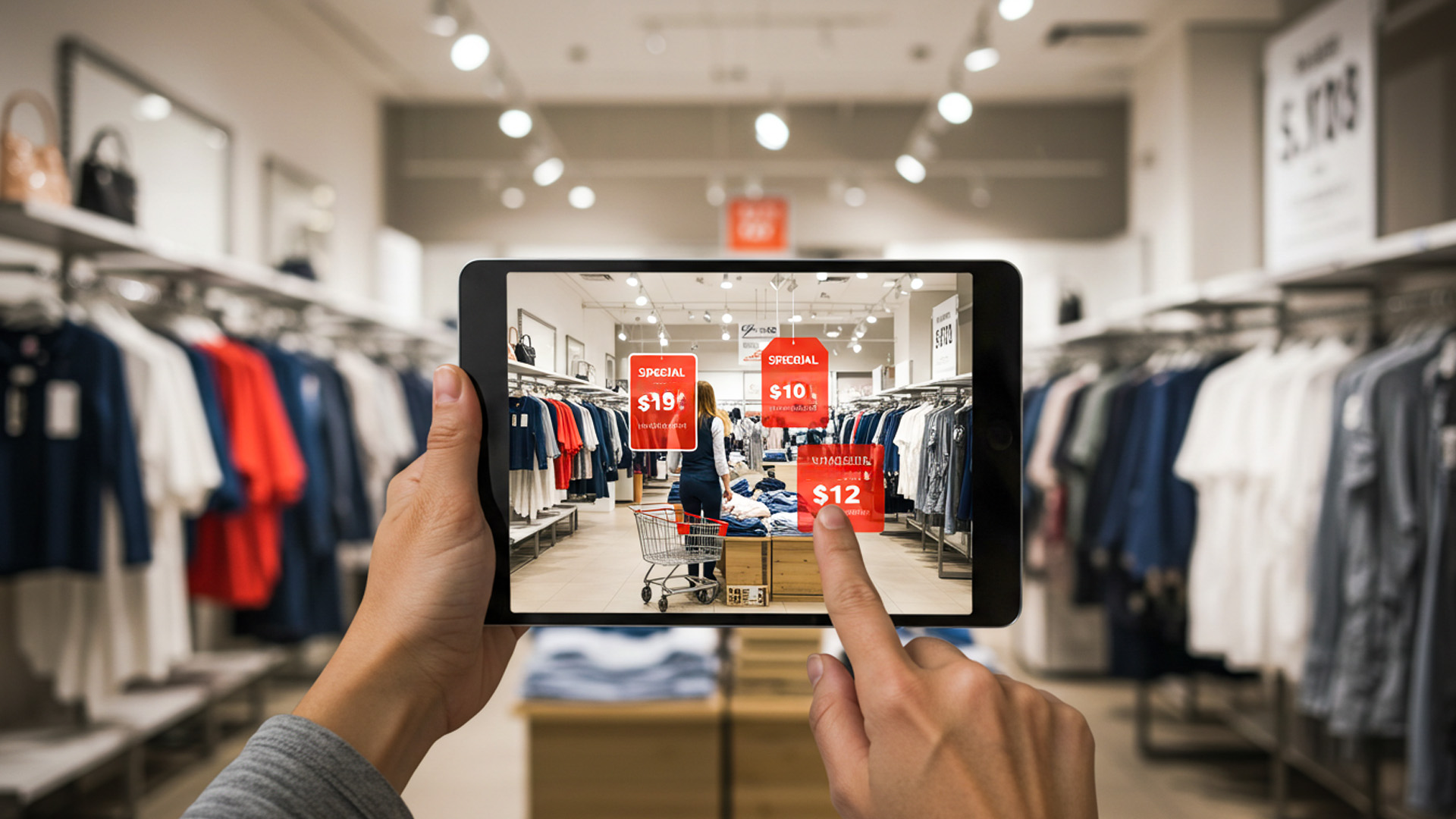
In large retail spaces such as department stores or supermarkets, AR apps can guide customers to specific products, help them explore promotions, and even suggest complementary items. Customers can simply point their smartphones at products, and the app will overlay detailed information about them, including reviews, prices, and even product comparisons.
AR-powered in-store navigation can take things a step further by creating immersive experiences. For example, a store could host AR-powered scavenger hunts, where customers are encouraged to explore the entire store to find hidden items or clues. This creates an interactive shopping experience that blends entertainment and commerce, encouraging customers to spend more time in-store and discover new products.
This personalized, guided shopping experience not only enhances the customer’s journey but also drives engagement. For the retailer, it’s a chance to increase sales through targeted recommendations and dynamic promotions that customers can instantly access as they walk through the store.
Augmented Retail Marketing and Promotions
AR is also a powerful tool for retail marketing. Local businesses can leverage AR to offer customers unique, limited-time experiences that prompt immediate engagement. Take, for example, the growing trend of AR-enabled promotions that unlock special offers or discounts when customers interact with branded AR content. By placing interactive QR codes or AR markers throughout a store, businesses can encourage customers to scan them, triggering promotional content that’s personalized to their preferences.
Local shops can also use AR to create brand stories that resonate more deeply with customers. Imagine a local bakery using AR to show the history of its recipes, providing behind-the-scenes footage of the baking process or even virtual tours of the bakery’s origins. This type of interactive storytelling builds brand loyalty and emotional connections with customers, making them more likely to return.
Real Estate Reinvented: Virtual Tours and Interactive Listings
Revolutionizing Property Showings
For real estate agents and property developers, AR has opened up entirely new ways to showcase properties. Traditional property showings often involve lengthy visits, travel time, and coordination between agents and potential buyers. With AR, these visits can happen virtually, allowing clients to explore properties from anywhere in the world.
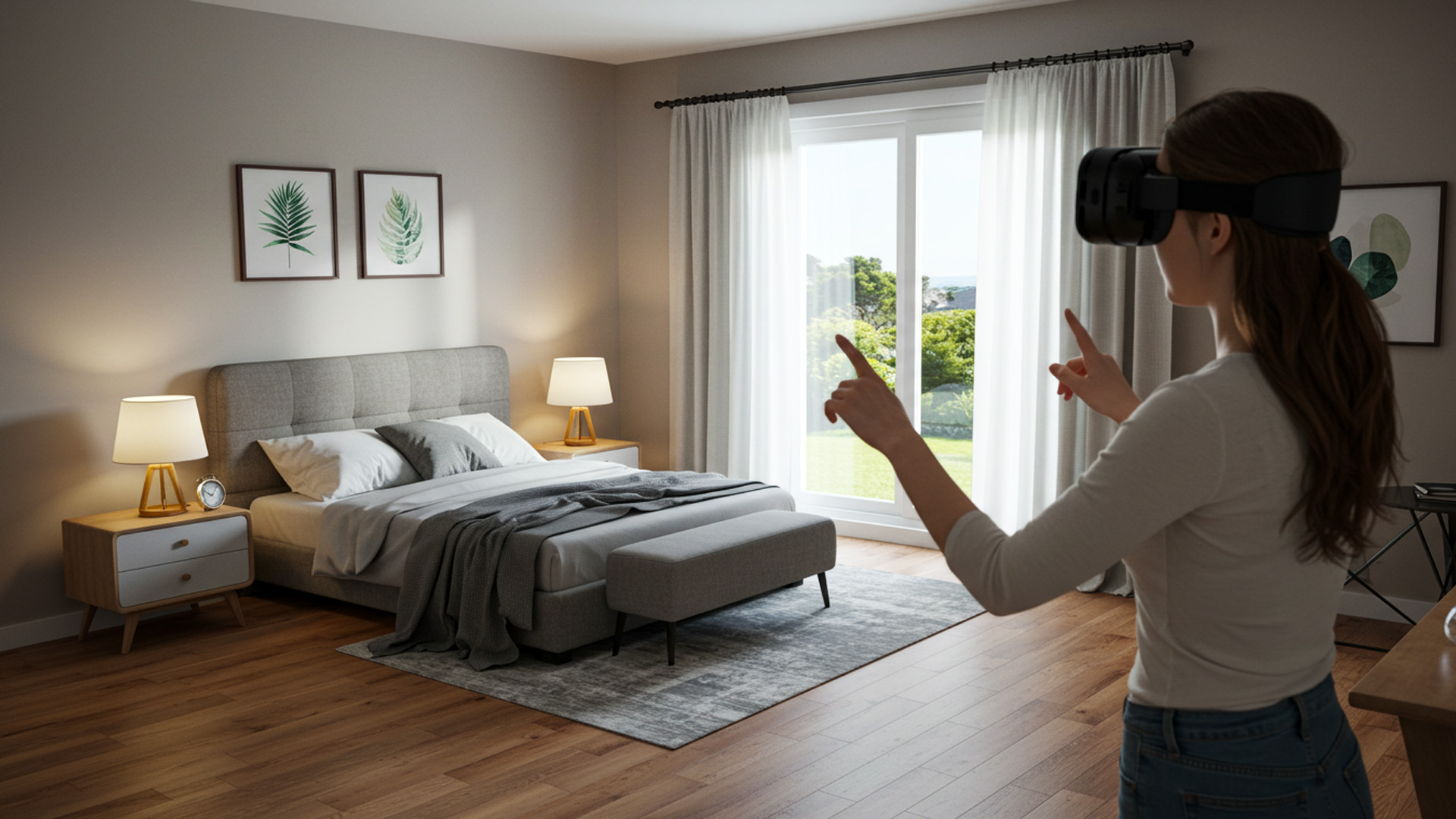
By leveraging AR, real estate businesses can provide immersive virtual tours that let potential buyers or tenants walk through properties in real-time, as if they were physically there. This eliminates the need for multiple in-person visits and allows clients to view properties at their own pace, enhancing convenience. For example, if a person is interested in an apartment but is located overseas, they can access a 3D tour of the property, checking out every room and exploring the layout from the comfort of their home. This virtual experience can also be enriched with interactive features, such as clickable buttons that provide more information on the property’s features, neighborhood, and amenities.
Another significant benefit of AR in real estate is its ability to provide interactive floor plans. Buyers can view properties and, at the same time, manipulate digital floor plans that overlay the physical space. These interactive models allow clients to visualize the layout of the property with much greater clarity, helping them understand space and flow before committing to a decision.
AR-Enhanced Property Visualization
Many potential buyers struggle to visualize how an empty plot or a dilapidated property will look once fully developed or renovated. AR technology has solved this challenge by superimposing digital models over the real-world property, allowing users to see what the finished product will look like in its actual location. This gives prospective buyers a clearer vision of the final project, enhancing their ability to make purchasing decisions.
For example, imagine a real estate developer showing clients an undeveloped plot of land. Using an AR app, clients can view a 3D model of a proposed building, placed precisely where it would stand on the land. This kind of visualization makes it easier for buyers to understand the scale of the project and how it fits into the existing environment.
For existing properties, AR can allow clients to explore design options, such as virtual staging, without physically rearranging furniture. By simply pointing their smartphone or tablet at an empty room, they can view different furniture layouts, color schemes, and décor options. This enables homebuyers and renters to see the full potential of a space, making it easier to envision their own future there.
Tourism Transformed: AR as a Travel Companion
AR for Navigation and Information on the Go
Tourists are increasingly using AR as a travel companion, enhancing their ability to explore and navigate unfamiliar cities. AR apps can overlay digital information on the user’s physical environment, providing context and details about various landmarks, attractions, or points of interest.
For example, a tourist visiting a historic landmark can point their smartphone at the structure, and AR will display relevant historical facts, important dates, and even images from the past. This real-time access to information enriches the experience, offering visitors a deeper understanding of their surroundings.
AR-powered maps also provide real-time guidance, overlaying directions on the streets, helping tourists find their way with greater ease. Whether it's locating the best restaurants, nearby attractions, or public transportation routes, AR ensures that tourists can navigate the city without confusion.
For local businesses, this represents an opportunity to engage tourists in a way that is both informative and immersive. By integrating AR into their marketing efforts, local shops and restaurants can offer digital content that enhances the visitor’s journey, whether through discounts, historical insights, or location-based offers.
Creating Immersive Cultural and Heritage Experiences
For cultural institutions, AR can turn traditional visits into engaging, interactive experiences that bring history and culture to life. Museums, galleries, and historic sites are increasingly integrating AR to enhance their exhibits and connect visitors with the past in new, innovative ways.
Imagine standing in front of an ancient statue in a museum, and through your AR device, you can see the statue come to life, moving or interacting with its surroundings. Or picture visiting a historical battlefield and using AR to witness a re-enactment of a famous battle, with soldiers and horses projected onto the landscape. These experiences allow visitors to actively engage with history in a way that textbooks or static displays cannot replicate.
Such cultural and heritage-based AR experiences not only make visits more memorable but also increase the level of engagement. Visitors are no longer passive observers—they are active participants in the stories they are being told. This leads to greater retention of information, stronger emotional connections with the cultural offerings, and ultimately, a more enjoyable and enriching experience.
Local Business Growth: Driving Foot Traffic with AR
Engaging Local Shoppers and Increasing Store Visits
For local businesses, AR is a powerful tool to increase foot traffic and drive customers to their stores. By offering AR-driven experiences and promotions, businesses can create a sense of excitement and engagement that brings customers through their doors.
For example, a local café could partner with an AR app to create a virtual treasure hunt around the city. Customers can search for hidden QR codes, each unlocking a special offer or discount. This type of gamified experience adds a fun element to shopping and encourages customers to explore local businesses.
Local retailers can also create AR-powered loyalty programs that reward customers for interacting with their products. Whether it’s scanning an item on a shelf to receive a digital coupon or earning points for visiting multiple locations in the area, these interactive experiences create stronger ties between businesses and their customers. Through the integration of AR, businesses can turn mundane tasks into enjoyable, rewarding experiences, further building brand loyalty.
Customer Loyalty and Gamification through AR
Gamification is one of the most effective ways to foster customer loyalty, and AR can elevate this concept to new heights. By incorporating AR elements into loyalty programs, businesses can engage customers in ways that go beyond traditional punch cards or discounts.
For instance, local retailers might use AR to create challenges or puzzles that customers can complete in exchange for rewards. This not only enhances the shopping experience but also incentivizes customers to return, encouraging repeat visits. These AR-driven loyalty programs are also highly customizable, allowing businesses to tailor them to the preferences of their target audience.
Gamified AR experiences are especially effective in creating a sense of community. When customers can share their achievements with others, whether through social media or in-store leaderboards, it drives further engagement and amplifies the overall impact of the program.
The Future of Local Business with AR
The potential of AR for local businesses is immense. As this technology continues to evolve and integrate into various industries, it will play an even more significant role in shaping customer experiences and driving business growth. Whether it’s enhancing the retail shopping experience, revolutionizing property showings in real estate, or offering immersive, informative travel experiences, AR provides local businesses with the tools to innovate and engage like never before.
As cities continue to embrace digital transformation, those businesses that adopt AR will be at the forefront of this shift. By leveraging AR to enhance customer interactions, improve accessibility, and create unique, memorable experiences, businesses can secure a competitive advantage, attracting new customers and retaining loyal ones. The future is interactive, immersive, and digital—and AR is the bridge between the physical and virtual worlds that will propel local businesses into the future.

The Future Of Local Business With Ar
Author: Elisha Roodt
Durban's leading intelligence hub on immersive technology. Delivering comprehensive coverage, expert analysis, and breakthrough news on Virtual Reality (VR), Augmented Reality (AR), and the Metaverse.